When considering solar street light installation, one crucial question arises: what is the best height for installing a solar street light? The height of these lights significantly influences their efficiency and effectiveness. Proper illumination is essential for safety and visibility in public spaces. A height that is too low may cause light pollution and waste energy. Conversely, a height that is too high can leave areas unlit and unsafe.
Experts suggest a range of 15 to 25 feet for most urban environments. This height ensures optimal light distribution while minimizing glare. However, factors such as pole spacing, lamp type, and the specific area’s needs should greatly influence the final decision. Adjustments may be necessary based on local conditions, like trees or buildings that obstruct light.
It's important to reflect on local standards and community feedback. Every area is unique, and what works in one location may not be suitable for another. Engaging with residents can provide valuable insights. Striking a balance between practical height and community needs is key. Understanding what is the best height for installing a solar street light requires thorough research and thoughtful consideration.
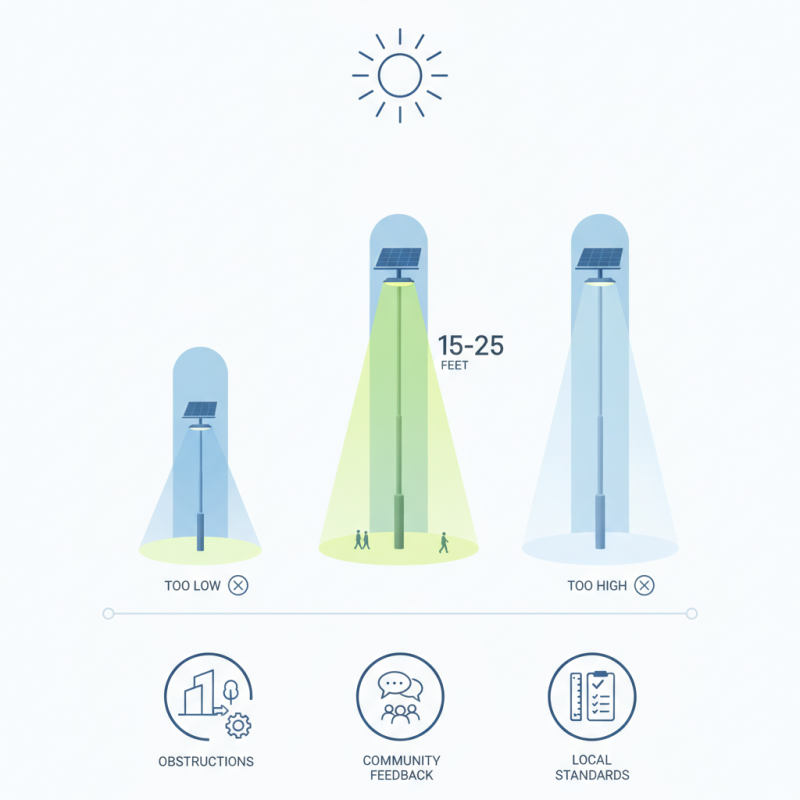
When deciding the ideal height for solar street light installation, several factors come into play. One of the most critical aspects is the surrounding environment. Urban areas typically require taller poles due to buildings and trees. In contrast, rural settings might benefit from shorter installations. This variation can greatly affect light distribution and visibility.
The purpose of the light also matters. For areas requiring high visibility, like intersections, a height of 15 to 20 feet is often suggested. In residential areas, lower heights, around 10 to 15 feet, may be preferable. However, achieving the right height can sometimes fall short if the pole is poorly positioned. Obstructions or even neighboring structures can block light, reducing effectiveness.
In addition to these considerations, local regulations may influence the choice of height. Some areas may have strict guidelines for street light installations. It's wise to check these regulations early in the planning process. Adapting to guidelines is essential, yet might limit creativity. Ultimately, selecting the appropriate height involves balancing numerous factors to achieve optimal lighting.
When installing solar street lights, the height is crucial for effective illumination. The recommended height varies based on the environment. In residential areas, a height of 12 to 15 feet works well. This height allows light to disperse evenly across driveways and walkways.
For urban settings, increase the height to around 15 to 20 feet. Taller installations help reduce obstructions from buildings and trees.
Open areas like parks may require heights of 15 to 25 feet. This ensures that the light reaches a wider area, providing safety at night. For pathways, a lower height of about 10 to 12 feet can create a cozy atmosphere. However, inadequate height may lead to shadowy spots.
Tips: Consider the surrounding structures when selecting height. Make sure lights aren't blocked by trees or poles. Regularly evaluate the effectiveness of your installation. Reassess periodically to ensure your lights are functioning optimally. Suboptimal placement can lead to underserved areas. Always prioritize visibility and safety when determining the installation height.
The height of solar street lights significantly influences their light distribution and visibility. Higher installations can provide broader coverage. However, too much elevation may lead to light being cast away from the target area. It can create dark spots, counteracting the purpose of illumination. Finding a balance is essential for effective lighting.
Consider the environment where lights are being installed. An urban area with tall buildings may benefit from higher lights. Conversely, a park with open spaces might need lower heights for more focused beams. Test different heights to observe where lighting is most effective.
Tips for optimal installation include assessing the area’s unique features. Monitor how the light interacts with various surfaces. Ensure lights aren't obstructed by trees or signage, as this can diminish visibility. Adjust the height based on user feedback to refine the installation for better outcomes. Experiment with angles and positions to maximize brightness and minimize glare, inviting continuous improvement in design.
When considering the installation of solar street lights, the context of the environment plays a crucial role. Urban areas typically experience different lighting needs compared to rural settings. Research indicates that urban spaces require higher light intensity due to increased pedestrian traffic and vehicle movement. According to the International Dark-Sky Association, optimal light level ranges from 1.5 to 2.5 foot-candles in city streets. This can lead to a recommended pole height of 14 to 18 feet to achieve adequate coverage without overwhelming light pollution.
In contrast, rural areas often have lower traffic density and different visual needs. Lighting requirements may be less intensive, allowing for pole heights of 10 to 14 feet. The Illuminating Engineering Society suggests that such heights can suffice for residential backroads, providing sufficient light while minimizing energy waste. Placement should be prioritized near community landmarks to enhance safety without creating excessive glare.
Installation also involves consideration of local laws and ordinances. City regulations may dictate light placement, necessitating upward adjustment if structures obstruct visibility. An understanding of these nuances is vital. The diversity of urban versus rural demands on solar street lighting often leads to a need for ongoing assessments, ensuring efficiency and community satisfaction.
| Area Type | Recommended Height (ft) | Light Coverage Radius (ft) | Typical Pole Material | Common Applications |
|---|---|---|---|---|
| Urban | 12-15 | 20-30 | Aluminum | Roadways, Parks, Sidewalks |
| Suburban | 10-12 | 15-25 | Steel | Residential Streets, Paths |
| Rural | 15-18 | 25-40 | Composite Plastic | Country Roads, Pathways |
| Remote | 18-20 | 30-50 | Galvanized Steel | Access Roads, Trails |
When considering the optimal height for solar street light installation, regulatory standards play a crucial role. According to the Illuminating Engineering Society (IES) guidelines, street light height typically ranges from 14 to 24 feet. This height ensures optimal illumination while minimizing glare for drivers and pedestrians. Depending on local regulations, the distance from the ground can vary. A height between 16 to 20 feet is often recommended for urban areas to balance light distribution and visibility.
Local authorities may have specific requirements based on the road type and usage. For example, residential streets may require lower lighting to reduce light pollution. In contrast, major thoroughfares often call for taller installations for improved distance coverage. The Federal Highway Administration (FHWA) suggests that streetlights should be placed at intervals of 100 to 150 feet apart, influencing their height for effective illumination.
However, it is essential to consider the evolving nature of street lighting technology. As LED technology advances, the intensity of light may allow for slightly lower installations without compromising safety. Personal observations reveal that some cities have installed lights at non-standard heights, leading to insufficient lighting in certain areas. This reflection highlights the need for adherence to established standards while remaining adaptable to technological advancements.
: A height of 12 to 15 feet is optimal for residential areas. This enhances even light dispersion.
Urban areas benefit from pole heights of 14 to 18 feet. Rural areas typically use heights of 10 to 14 feet.
Height ensures proper illumination and minimizes shadows. Taller lights can reduce obstructions from trees or buildings.
Yes, inadequate height can create shadowy spots. Regular evaluations are necessary to ensure proper visibility.
Yes, standards often recommend street light heights between 14 to 24 feet. Heights can vary by local regulations and road types.
Regular assessments are crucial. Untimely evaluations may lead to underserved areas and inadequate safety.
Proper placement near landmarks enhances safety. This minimizes glare while providing adequate light for pedestrian visibility.
Yes, lights should be spaced 100 to 150 feet apart. This spacing influences their overall height and effectiveness.
Advancements in LED technology allow for lower installations without compromising safety. Adhering to standards is still essential.
Non-standard heights may result in certain areas being poorly illuminated. This highlights the need for careful planning and adherence to guidelines.
When considering what is the best height for installing a solar street light, several factors come into play, including the environment in which the lights will be used. Recommended height ranges vary based on specific locations, with urban areas typically benefiting from taller installations due to increased light dispersion needs, while rural areas may require lower heights to maintain visibility without causing light pollution.
The impact of height on light distribution and visibility is significant, as the appropriate height ensures adequate coverage of the intended area while minimizing dark spots. Compliance with regulatory standards and guidelines is also crucial, as local codes may dictate minimum or maximum installation heights. Thus, careful consideration of these factors will lead to an optimal height selection for solar street lights, enhancing safety and visibility in various settings.

Zeteo Light