Solar powered string lights have become a popular choice for outdoor illumination. Many people wonder, "how long do solar powered string lights stay on at night?" This question reflects a common concern among users. According to energy expert Dr. Emily Carter, "The duration of light depends on several factors, including solar panel quality and the battery used." Her insights shed light on the variables affecting light longevity.
The performance of solar string lights can vary significantly. Factors such as sunlight exposure and battery capacity play crucial roles. On average, most solar lights provide illumination for about 6 to 8 hours after sunset. However, in less optimal conditions, they may only last a few hours. Understanding these nuances helps users set realistic expectations.
When planning a garden party or outdoor event, consider these details. Ensure the lights receive ample sunlight during the day. If they are shaded, their performance will diminish. Reflecting on your choices can lead to a more satisfying outdoor experience. It's essential to recognize that while solar lights are eco-friendly, they are not always perfect.
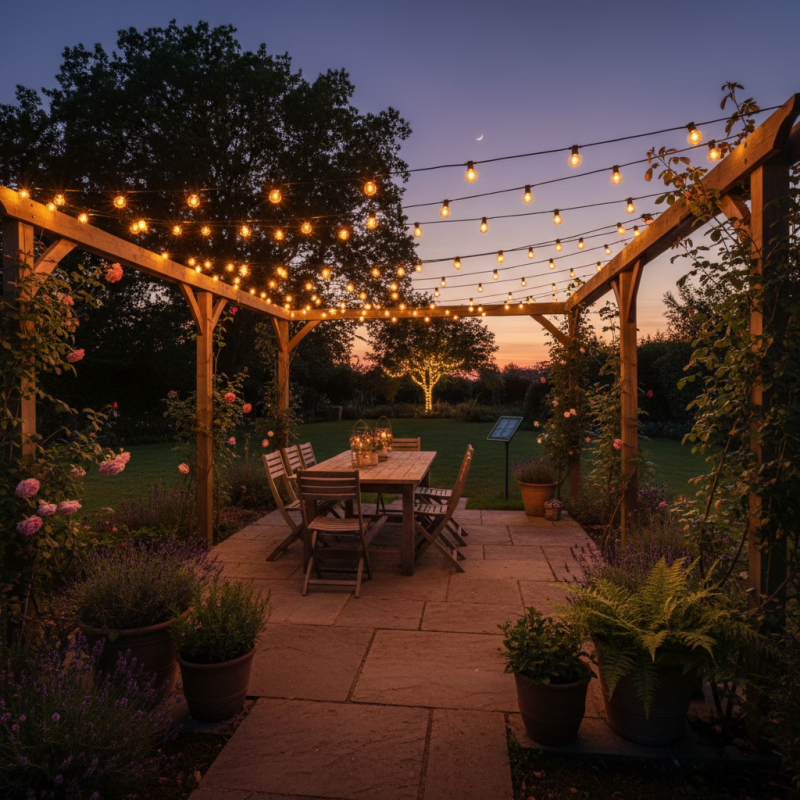
Factors Affecting the Runtime of Solar Powered String Lights
Solar powered string lights can create a magical atmosphere at night, but their runtime varies.
Several factors influence how long these lights last when the sun sets. The most important factor is the battery capacity. A larger battery can store more energy, enabling the lights to shine longer.
However, not all solar batteries are created equal. Some may degrade faster than others, leading to shorter runtimes over time.
Another critical factor is
sunlight exposure during the day. If the solar panel doesn’t receive adequate sunlight, the lights won’t perform well at night. Cloudy or rainy days can significantly
reduce charging efficiency. Be mindful of where the lights are installed. If they are shaded by trees or buildings, the runtime could drop substantially.
This can be an inconvenience if you expect them to last all night.
Temperature plays a role as well. Extremely hot or cold temperatures can affect battery performance.
Sometimes, the lights may not illuminate as expected on chilly nights. Individuals should be aware of these limitations.
The final runtime may not always meet expectations. Testing different locations and monitoring performance can help achieve better outcomes.
Understanding Solar Panel Efficiency and Its Impact on Performance
Solar panel efficiency plays a crucial role in determining how long solar-powered string lights last at night. Generally, solar panels convert about 15-20% of sunlight into usable energy. More efficient panels can reach up to 22% efficiency. However, factors such as weather, positioning, and cleanliness significantly affect performance. Studies show that a well-placed solar panel can charge effectively for up to 8 hours on a sunny day, resulting in 6-10 hours of light at night.
The performance of solar lights also depends on the battery capacity. Most solar string lights use rechargeable nickel-metal hydride batteries, which can store between 2000 to 3000 mAh. This capacity determines the total runtime after sunset. Sadly, lower-quality batteries may degrade faster, leading to shorter illumination periods. In some cases, poor sunlight exposure can prevent the batteries from fully charging, reflecting the importance of location.
Consider seasonal impact too. In winter, shorter days mean less charging time. A study from the National Renewable Energy Laboratory found that energy production can drop by 50% in winter months compared to summer. This variability can result in inconsistent performance, often leaving users frustrated. Regular cleaning of solar panels and optimizing their placement can mitigate such issues, but achieving ideal conditions remains a challenge.
How Long Do Solar Powered String Lights Last at Night? - Understanding Solar Panel Efficiency and Its Impact on Performance
| Solar Panel Efficiency % |
Battery Capacity (mAh) |
Average Runtime (Hours) |
Charging Time (Hours) |
Additional Features |
| 15% |
600 |
6-8 |
8 |
Waterproof, Remote Control |
| 18% |
800 |
8-10 |
6 |
Color Changing, Timer |
| 20% |
1000 |
10-12 |
5 |
Bluetooth Connectivity |
| 22% |
1200 |
12-14 |
4 |
Solar Motion Sensor |
Battery Capacity and Its Role in Nighttime Lighting Duration
Battery capacity significantly impacts how long solar-powered string lights last at night. Generally, these lights are equipped with rechargeable batteries, often lithium-ion or NiMH types. Studies show that larger capacity batteries can store more energy. This leads to longer illumination periods, even after sunset. Typically, a battery rated at 2000mAh can provide approximately 6-8 hours of light in optimal conditions.
However, various factors influence this duration. Weather conditions like cloudy days reduce solar charging efficiency, ultimately shortening nighttime performance. Additionally, temperature extremes can affect battery efficiency. For example, cold temperatures may cause batteries to drain faster than expected. This variability indicates a need for consumers to evaluate their environment when choosing solar products.
Continual usage impacts battery lifespan as well. Over time, frequent cycles of charging and discharging can degrade battery performance. Though many batteries last for several years, eventually, some may only hold 50% of their original capacity. Understanding these nuances is crucial for making informed decisions about solar-powered string lights. Without considering these factors, users may experience disappointment in expected illumination duration.
Environmental Conditions That Influence Solar Light Longevity
Solar-powered string lights can be a charming addition to outdoor spaces, but their performance largely depends on environmental conditions. One significant factor is sunlight exposure. Reports indicate that solar lights need at least 6-8 hours of direct sunlight to ensure a full charge. In shaded areas, their brightness and operational time can diminish significantly. Weather conditions also play a role; for instance, cloudy or rainy days can reduce their effectiveness.
Another crucial aspect is temperature. A study revealed that extreme heat or cold can negatively affect battery life. Solar lights typically use lithium-ion batteries, which perform optimally in mild conditions. If the temperature consistently falls below freezing or climbs above 85°F, the longevity of the lights can be compromised.
Tips: Consider placing your solar lights in areas that receive ample sunlight throughout the day. Regularly clean the solar panels to remove dirt and debris, as this can enhance performance. Lastly, be mindful of the seasonal changes and adjust placement accordingly to adapt to different light conditions.
Tips for Maximizing the Nighttime Performance of Solar String Lights
Solar-powered string lights can provide a delightful ambiance at night, but their performance depends greatly on several factors. The efficacy of these lights ultimately hinges on the quality of the solar panels and batteries used.
Solar panels typically convert about 15-20% of sunlight into usable energy, according to various industry reports. This conversion efficiency can directly impact how long the lights stay illuminated after sunset.
To maximize nighttime performance, consider the placement of the solar panels. Ideally, they should receive direct sunlight for at least six hours each day. This exposure can boost the battery charge and ensure the lights last longer into the evening. Many solar lights have LEDs that can last around 50,000 hours, but this isn't always guaranteed if the batteries are drained too quickly or don’t charge fully.
Regular maintenance is also crucial. Dust and dirt can accumulate on solar panels, reducing their efficiency. Some experts suggest cleaning the panels monthly to maintain optimal performance. While these lights can be enchanting, limitations arise from weather conditions. Rainy or cloudy days can result in shorter operational times, emphasizing the importance of monitoring environmental variables. Adjusting expectations based on these factors can lead to a more satisfying experience with solar-powered lighting.
Conclusion
Solar powered string lights are a popular choice for outdoor ambiance, but many wonder, "how long do solar powered string lights stay on at night?" The runtime of these lights is influenced by several factors, including the efficiency of the solar panels used to charge the batteries, the capacity of the batteries themselves, and various environmental conditions such as sunlight exposure and weather.
To maximize the nighttime performance of solar string lights, it is essential to optimize the placement of solar panels to ensure they receive ample sunlight during the day. Additionally, understanding battery capacity can help in estimating how long the lights will last after sunset. By considering these factors and following tips for proper usage and maintenance, users can enhance the longevity and brightness of their solar powered string lights during the night.

 Zeteo Light