Solar-powered string lights can turn a dark patio, balcony, or garden path into a warm evening space. However, their performance depends on sunlight, battery capacity, weather, and light settings. The most common question is: how long do solar powered string lights stay on at night? In real use, many models provide six to ten hours after a full day of direct sunlight. Cloudy weather may reduce that time noticeably.
This guide examines seven popular solar string lights through practical details, not only attractive product photos. We consider brightness, charging speed, battery type, waterproof construction, bulb spacing, installation, and nighttime runtime. A light with closely spaced LEDs may look brighter, while a longer strand can spread illumination more evenly. Small differences matter.
I have also found that “all-night lighting” can be an optimistic claim. A shaded panel, dusty surface, or weak rechargeable battery may shorten operation. Not always. Real conditions are messier than laboratory testing. These recommendations aim to balance manufacturer specifications with everyday experience, including patios that receive limited afternoon sun. You will also see which designs suit decorative ambiance, pathway visibility, or frequent outdoor use. No single model is perfect. The best choice depends on your location, available sunlight, climate, and expectations for brightness. Checking those factors before buying can prevent disappointing nighttime performance.
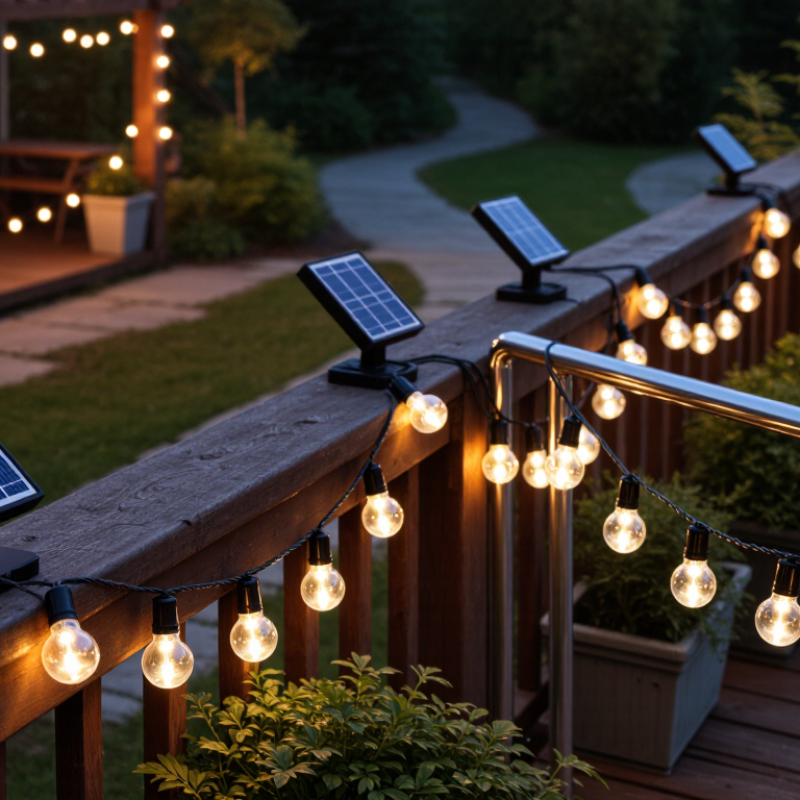
Solar-powered string lights are low-voltage decorative lights powered by sunlight. Their system usually includes a photovoltaic panel, rechargeable battery, charge controller, LED bulbs, and a light sensor. During daylight, the panel converts sunlight into electricity and stores it in the battery. At night, the sensor activates the LEDs automatically. No outlet is needed.
The panel’s output changes with weather, shade, dust, and seasonal sunlight. A small panel may charge efficiently during six bright hours but struggle beneath trees or winter clouds. The National Renewable Energy Laboratory reported a median photovoltaic degradation rate of about 0.5% annually across reviewed studies. However, that figure mainly describes larger photovoltaic systems, not every miniature outdoor panel. This distinction matters. Real gardens are messier.
LEDs can last for many years. The U.S. Department of Energy has reported that solid-state lighting may exceed 25,000 to 50,000 operating hours under suitable conditions. Yet the battery often limits practical service life. Repeated charging, freezing temperatures, heat, and incomplete charging can reduce its capacity. A well-positioned set may operate for two to five seasons, while a shaded set may fade much sooner. The advertised runtime also assumes a full charge, which is not guaranteed. Check the panel’s placement, battery type, water resistance, and replacement availability before judging durability. ыҟоуп
| Type of Solar String Light | Typical Light Source | Typical Runtime After a Full Charge | Approximate Charging Time | Expected Service Life | Best Use | Important Consideration |
|---|---|---|---|---|---|---|
| Warm White LED String Lights | LED bulbs, usually 20–100 lights | 6–12 hours | 6–8 hours of direct sunlight | LEDs: up to 25,000–50,000 hours; rechargeable battery: about 1–3 years | Patios, balconies, fences, and garden borders | Warm white LEDs generally use less energy than brighter color-changing modes. |
| Color-Changing LED String Lights | Multi-color LEDs with steady or flashing modes | 5–10 hours | 6–8 hours of direct sunlight | LEDs: up to 25,000–50,000 hours; battery: about 1–3 years | Parties, seasonal decoration, and accent lighting | Color-changing and flashing settings can reduce the nightly runtime. |
| Globe or Bulb-Shaped String Lights | Large decorative LED bulbs | 6–10 hours | 6–10 hours of direct sunlight | LEDs: up to 25,000–50,000 hours; battery: about 1–3 years | Outdoor dining areas, pergolas, and entertaining spaces | Larger bulbs may require more power and may produce fewer hours of light. |
| Fairy or Micro-LED String Lights | Small LEDs on thin, flexible wire | 8–14 hours | 4–8 hours of direct sunlight | LEDs: up to 25,000–50,000 hours; battery: about 1–3 years | Glass jars, wreaths, plants, and small decorative projects | The thin wire is flexible but can be damaged by repeated bending or rough handling. |
| Copper-Wire Solar String Lights | Micro-LEDs mounted on copper wire | 8–12 hours | 4–8 hours of direct sunlight | LEDs: up to 25,000–50,000 hours; battery: about 1–3 years | Trees, railings, sculptures, and detailed outdoor decoration | Copper wire is discreet and weather-resistant, but connections should still be protected from standing water. |
| Solar Net Lights | LEDs arranged in a connected mesh | 6–10 hours | 6–10 hours of direct sunlight | LEDs: up to 25,000–50,000 hours; battery: about 1–3 years | Shrubs, bushes, balconies, and small trees | The solar panel needs an unobstructed position even when the light mesh covers a shaded area. |
| Heavy-Duty Outdoor String Lights | Weather-resistant LED bulbs with reinforced cable | 6–12 hours | 6–10 hours of direct sunlight | LEDs: up to 25,000–50,000 hours; battery: about 1–3 years | Year-round patios, decks, fences, and outdoor structures | Look for an outdoor-rated enclosure, such as IP44 or higher, and secure the panel against strong wind. |
How they work: A solar panel converts sunlight into electrical energy, which is stored in a rechargeable battery during the day. A light sensor usually turns the LEDs on automatically at dusk. Actual runtime and service life vary with sunlight, temperature, battery quality, operating mode, weather exposure, and maintenance.
They are low-voltage decorative lights powered by sunlight. A small panel stores energy in a rechargeable battery. The lights need no electrical outlet.
A light sensor detects darkness and activates the LEDs automatically. The system usually includes a panel, battery, controller, sensor, and bulbs. Simple, but not perfect.
Aim for six to eight hours of direct sunlight each day. Place the panel away from porch shadows, trees, and building overhangs. Clouds can reduce the evening runtime.
Many sets operate for two to five seasons. Rechargeable batteries often weaken after one to three years. The LEDs may keep working longer.
Dust, shade, winter clouds, and weak batteries can reduce brightness. Check the switch, panel angle, wiring, and battery first. Replacement may not be necessary.
Compare light output, battery capacity, charging time, and weather protection. Check whether the stated runtime assumes full sunlight and low brightness. Also check battery replacement access.
Look for an IP65 rating or higher for rain and dust exposure. This rating does not guarantee permanent sealing. Cracked controllers can still collect water.
Wipe the panel every few weeks with a soft, damp cloth. Secure loose wires during storms and avoid pulling the cable. Inspect insulation for cracks before winter. My own installation was not flawless.
Solar-powered string lights use small photovoltaic panels to convert sunlight into stored energy, which powers the lights after dark. They are a practical, energy-saving choice for patios, gardens, balconies, pathways, and special outdoor settings. The seven best options may differ by purpose, including compact decorative lights, weather-resistant models, brighter pathway designs, flexible wire styles, and lights with larger panels for longer operation. Before choosing, compare brightness, battery capacity, charging time, lighting modes, panel efficiency, weather resistance, installation method, and cable length.
A common question is, “how long do solar powered string lights stay on at night?” Most can operate for about six to twelve hours after receiving sufficient direct sunlight, although cloudy weather, seasonal changes, battery age, and lighting settings can affect performance. To extend their lifespan, place the panel where it receives unobstructed sunlight, clean it regularly, protect the lights from standing water or severe weather, avoid overloading the wire, and replace the rechargeable battery when its capacity declines. With proper care, quality solar string lights can provide dependable outdoor illumination for several years.

 Zeteo Light