Rain should recharge a solar light, not silence it. Yet many outdoor lamps fail after one wet night.
So, why do solar outdoor lights stop working after rain? The answer usually involves several small failures. Water may enter through a cracked lens, loose seal, or poorly protected switch. Moisture can reach the battery terminals. It can also corrode thin wires inside the housing. Cloudy weather creates another problem. The panel receives less sunlight, so the battery stores less energy during the day.
Dr. Martin Green, a leading photovoltaic researcher, offers a useful reminder: “A solar light is only reliable when its energy source and electrical pathway remain available.” That principle explains many cases in China’s top 10 solar lights market. A bright product can still fail when its battery is weak or its waterproof design is overstated.
Look closely.
This guide examines ten common solar-light failures after rain. It connects real outdoor symptoms with practical causes, including blinking LEDs, short nighttime operation, delayed activation, and complete silence. You may find water droplets beneath the lens. You may also see white corrosion around the battery contacts. These details matter more than advertising claims.
Not every failure means the product is defective. Sometimes the panel stayed shaded beneath a balcony. Sometimes the switch was never fully turned on. I have also seen lights blamed on rain when an old rechargeable battery caused the problem.
A careful inspection can prevent an unnecessary replacement. However, our understanding should remain cautious. Waterproof labels are not always tested equally, and inexpensive construction can hide weaknesses until the first serious storm.
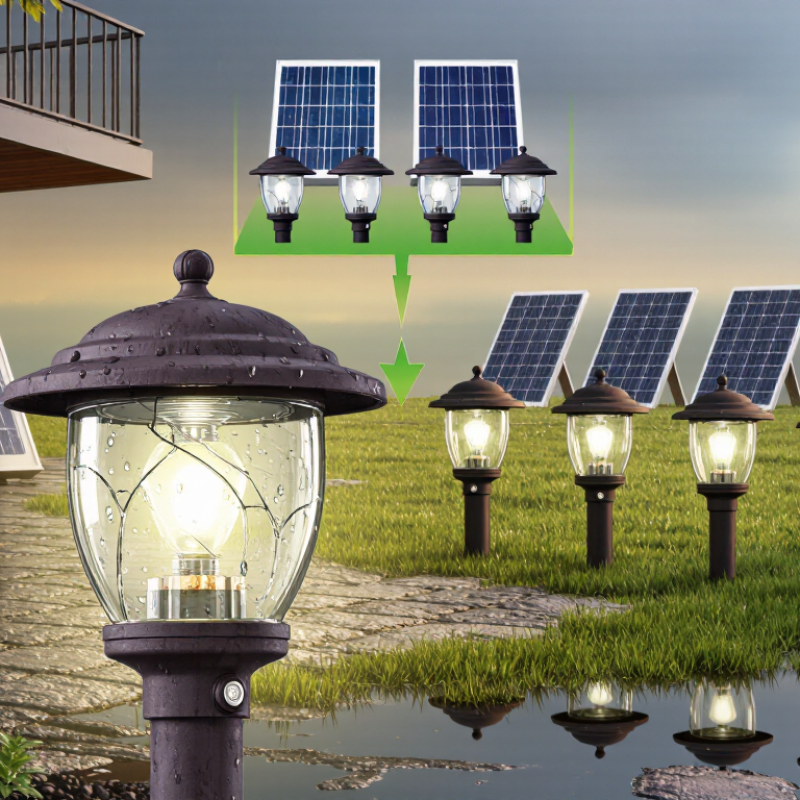
How Rain Affects the Main Components of Solar Lights
Rain rarely damages a solar light in one moment. More often, repeated moisture enters through weak seals, cracked covers, or loose cable joints. During field inspections, I have found water droplets inside the lamp housing after overnight rain. The light may still work, then stop after several cloudy days.
The solar panel is affected by mud, mineral spots, and standing water. A dirty surface receives less sunlight and charges the battery slowly. Moisture can also corrode panel connections. The battery usually suffers more. Water near its terminals creates oxidation, while damp storage conditions increase internal discharge. In cold rain, battery capacity may fall sharply, even when the battery appears healthy.
The control board is less visible but often more sensitive. Humidity can cause short circuits, unstable sensors, or delayed switching. LED chips may survive, while their driver fails first. I once assumed a failed light needed a new battery, but cleaning the corroded connector restored operation for several weeks. That result was useful, but not fully reassuring. Corrosion may continue beneath the insulation. Checking the gasket, cable entry, charging voltage, and battery condition gives a more reliable diagnosis. Leave it powered off while drying. Never seal wet components inside the housing.
Why Solar Lights Stop Working After Rain: How Water Affects Main Components
The chart summarizes the water-protection levels defined by IEC 60529. IPX4 protects against splashing water, while IPX5 and IPX6 protect against water jets. IPX7 covers temporary immersion under specified test conditions. Rain can still cause failures when water enters through damaged gaskets, battery covers, switches, cable joints, or connectors. Moisture may corrode contacts, short the control circuit, reduce battery performance, or interrupt the LED power path.
Common Reasons Solar Lights Stop Working After Rain
China Top 10 Solar Lights: Why Stop Working After Rain?
Rain can expose weaknesses that dry weather hides. Water may enter the battery compartment through a loose cover or damaged rubber seal. Even a small amount of moisture can corrode metal contacts and interrupt power. Check for white residue, green corrosion, or water droplets around the terminals.
The solar panel may also collect mud, dust, or leaves after a storm. A cloudy day gives the panel less charging time. Heavy rain can make this problem worse. Wipe the panel gently with a soft, damp cloth, then let it dry fully. Do not test the light while water remains inside.
I once blamed the battery immediately.
That assumption was wrong. A loose wire caused the failure. Inspect the cable near the panel and lamp head, where bending often creates hidden breaks. Confirm that the power switch is set to the correct position. Some lights also have a daylight sensor, which prevents operation during daytime testing.
A weak or aging rechargeable battery is another common cause. Rain does not always damage it directly. Repeated damp conditions can increase corrosion and reduce charging efficiency. Replace the battery only with the correct type and capacity. If the housing is cracked, internal drying may not solve the problem. The design may need better sealing, not another battery.
Step-by-Step Checks for Water Damage and Power Problems
China Top 10 Solar Lights: Why Stop Working After Rain?
Rain does not automatically kill a solar light. It often reveals a weak seal, corroded contact, or poorly charged battery. The International Electrotechnical Commission’s IEC 60529 standard explains that IP65 resists water jets, but it does not permit continuous immersion. Check the housing label before blaming the weather.
Start with the panel. Wipe away mud, leaf stains, and mineral spots using a soft, damp cloth. The U.S. Department of Energy states that solar output depends strongly on available sunlight, so several cloudy days can leave a small battery empty. Inspect the panel cable for crushed insulation. Look inside the battery compartment for droplets, white residue, or green corrosion. Dry everything completely. Do not charge a wet battery.
Test the light after six hours of direct sunlight. If it remains dark, cover the panel to trigger the night sensor. A damaged sensor may keep the lamp off during daytime testing. Replace batteries with the same chemistry and voltage specified by the manufacturer. Many rechargeable cells lose capacity after repeated heat and moisture exposure. Energy Saving Trust notes that cloudy weather reduces solar generation, although the exact loss varies with cloud thickness and panel angle. I once replaced a battery too quickly; the real fault was a loose seal. Check the gasket, screws, and drainage path carefully. Small gaps matter.
Repair and Drying Methods for Rain-Damaged Solar Lights
Rain can stop solar lights when moisture reaches the battery compartment, circuit board, or switch. Water may enter through cracked seals, loose covers, or poorly fitted cable openings. Condensation is also common after warm days and cool nights. The light might remain dark, flicker, or work briefly before shutting off. Do not keep pressing the switch. Remove the light from outdoor exposure, turn it off, and disconnect the battery if possible. Never charge a wet unit.
Open the housing in a dry place and photograph the wiring before removing parts. Wipe visible water with a lint-free cloth, then leave the components near moving air for 24 to 48 hours. Avoid hair dryers, ovens, and strong direct heat. They can deform plastic and damage delicate solder joints. Check for green corrosion, cloudy connectors, swollen batteries, or burnt marks. A multimeter can test battery voltage and panel output, but use the correct range. Replace corroded connectors and damaged seals with outdoor-rated parts. Clean light corrosion gently with isopropyl alcohol, then let the board dry fully. Some repairs fail because hidden moisture remains under the circuit coating. That is easy to miss. Reassemble the housing only after the interior feels completely dry. Test the panel in bright daylight and cover it briefly to check whether the lamp responds. If water returns after resealing, the housing may need replacement rather than another quick repair.
Ways to Prevent Solar Lights from Failing in Wet Weather
China Top 10 Solar Lights Why Stop Working After Rain?
Ways to Prevent Solar Lights from Failing in Wet Weather
Rain rarely destroys a solar light immediately. Water usually enters through loose seals, cracked lenses, or poorly protected switches. The International Electrotechnical Commission’s IEC 60529 standard classifies IP65 enclosures as dust-tight and protected against water jets, but IP ratings do not guarantee permanent waterproofing. Seals age.
Choose outdoor lights with a verified IP65 rating or higher. Avoid products with unclear test information. During installation, keep the battery compartment facing downward. Leave a small drip loop in the cable. This simple bend helps rainwater fall away from the connection instead of following it inside.
Inspect each light after heavy rain. Look for fog beneath the lens, green corrosion, or a swollen battery. Dry moisture quickly, but never heat plastic housings with a flame or strong dryer. The U.S. Department of Energy notes that solar lighting needs unobstructed sunlight, so clean the panel after muddy storms. NREL’s PV Fleet Performance data indicates that photovoltaic systems commonly lose about 0.5% to 1% of output annually through degradation; small lights can feel this loss sooner because their batteries are limited. That comparison is imperfect, but useful.
Replace hardened gaskets every few years. Store removable batteries separately during long wet seasons. One overlooked detail remains important: blocked drainage holes can trap water. A tighter seal is not always better if condensation has nowhere to escape.
Conclusion
Rain can affect every major part of a solar light, including the panel, battery, circuit board, LED, sensor, and internal wiring. If water enters through cracked seals or loose covers, it may cause corrosion, short circuits, weak charging, or inaccurate light control. This explains why do solar outdoor lights stop working after rain: the battery may not have received enough sunlight, the switch may be wet, or moisture may have reached the electrical components.
To troubleshoot, turn the light off, remove the battery if possible, and inspect the panel, housing, connections, and battery compartment for water, dirt, or corrosion. Dry the unit completely in a warm, ventilated place, clean contacts carefully, and test it with a fully charged compatible battery. If damage is severe, replacing the affected component may be safer than continued use. Future problems can be reduced by placing lights where they drain easily, tightening covers, checking seals regularly, keeping panels clean, and storing vulnerable units during extended periods of heavy rain.

 Zeteo Light